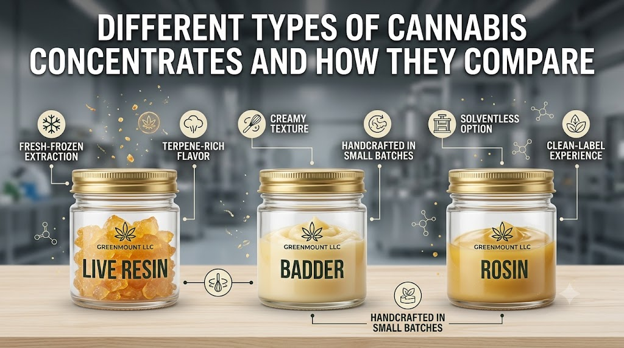
Different Types of Cannabis Concentrates and How They Compare
October 9, 2026
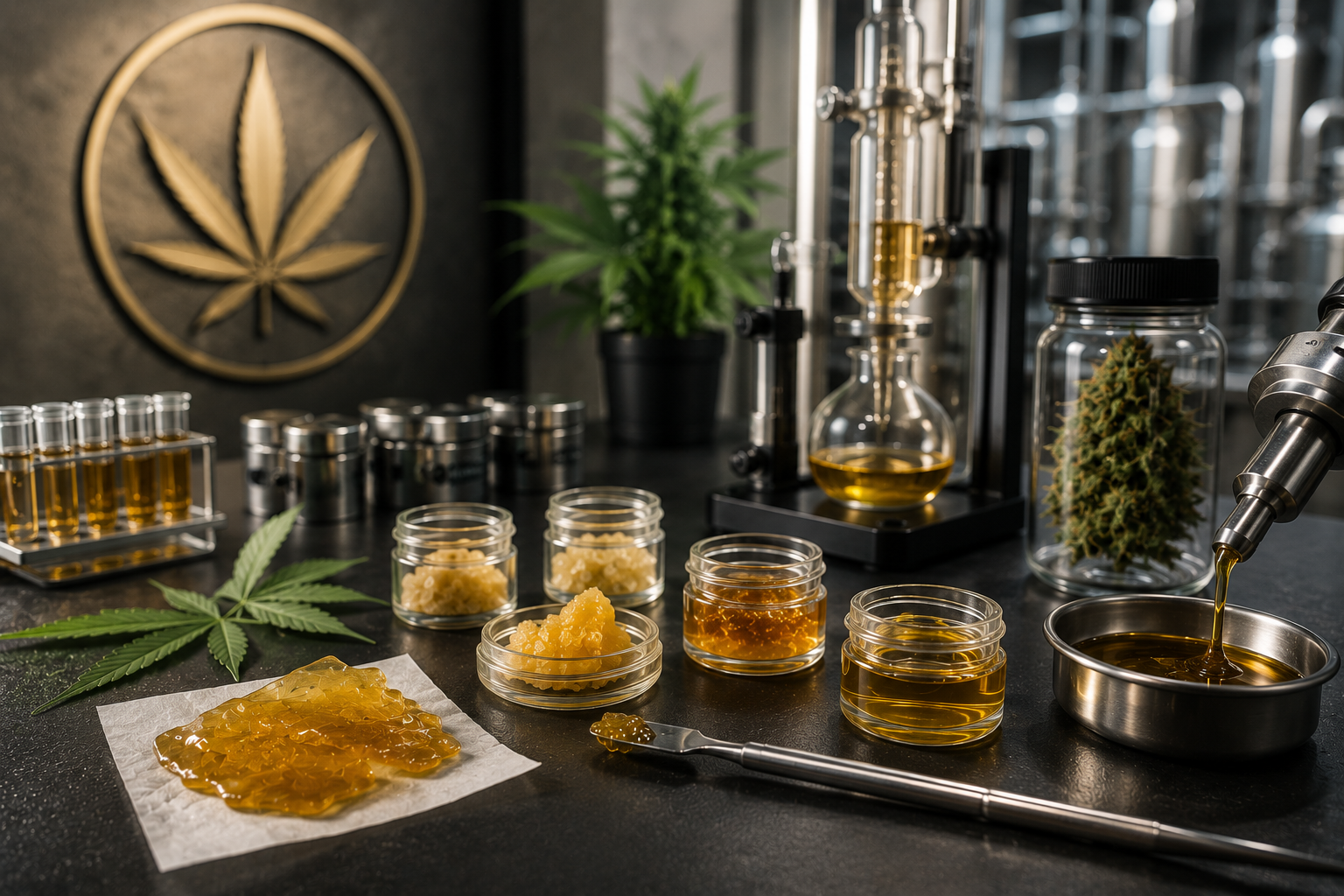
Modern cannabis concentrates are not made by chance. They come from a careful process that starts with good plant material and moves through extraction, refining, testing, filling, and packaging. For readers who want a clear view of cannabis concentrate manufacture, this topic matters because quality depends on many small decisions.
Since 2017, Greenmount LLC has worked in California’s regulated market with a focus on small-batch vape cartridges and concentrates. This article explains how the process works in simple terms, why safety rules matter, and how consistency is built into each stage.

Modern concentrate production is a mix of plant science, equipment control, and strict recordkeeping. The goal is to turn cannabis into a clean, stable, and useful extract without losing the parts of the plant that shape flavor and effect.
In simple terms, the process usually includes:
At the center of cannabis concentrate manufacture is balance. A manufacturer wants strong cannabinoid content, but also wants terpene retention, product stability, and repeatable results. If one part of the chain goes wrong, the final product can lose flavor, texture, or consistency.
The quality of any concentrate begins before extraction. The raw input changes the result more than many people think. Fresh-frozen flower is often used for live resin because it helps preserve terpene content. Premium flower or hash may be chosen for rosin because the pressing process depends on clean, quality starting material.
A production team usually looks at a few main points first:
Small-batch work gives more control here. A team can match each input to the right product style instead of forcing every batch through one fixed formula. That helps protect strain character and gives a clearer path through extraction and post-processing.
Greenmount LLC operates in California’s regulated cannabis space, where Type 7 manufacturing covers volatile solvent extraction. This license type allows the use of volatile solvents such as butane, propane, or ethanol. Those materials can be useful in extraction, but they also carry fire and explosion risks if they are not handled in the proper setting.
That is why Type 7 facilities must follow strict rules. Greenmount LLC cannabis manufacturing reflects that environment, where safety and compliance are built into daily operations, not treated as an afterthought.
Key requirements include:
This structure protects workers, supports product quality, and keeps operations aligned with California rules.
Different concentrates need different methods. Greenmount LLC focuses on small-batch vape cartridges, badder, and rosin carts, so the process may change depending on the product goal.
Common methods include:
In real cannabis concentrate manufacture, the method should match the material and the intended product. That is one reason small-batch production stays useful. It allows more room for product-specific choices instead of one broad system for every run.
Extraction is only part of the work. After oil is collected, post-processing begins. This stage shapes purity, texture, flow, and shelf stability.
Important steps may include:
These choices affect how a product tastes, how it fits into hardware, and how it performs over time. Even a strong extract can fall short if the oil is too thick, too thin, or poorly balanced for its final use.
Turning concentrate into a cartridge takes precision. The oil has to be clean, stable, and suitable for the hardware. If it is too dense, the cartridge may not wick well. If it is too thin, leakage can become a problem.
For teams working to be seen as the best cannabis vape manufacturer, the filling stage matters as much as extraction. Accuracy, temperature control, and hardware compatibility all shape the user experience.
This stage often includes:
This is also where Greenmount LLC vape products connect process with real consumer use. A cartridge has to do more than test well on paper. It has to perform properly from the first pull to the last.
A regulated process depends on documentation and testing. Every batch must be tracked and reviewed before it can move into the market. This is not extra paperwork. It is part of the manufacturing discipline.
| Stage | What is checked | Why it matters |
| Input material | Source, batch ID, condition | Supports traceability and clean production |
| Extraction | Equipment settings, SOP use, safety logs | Helps protect workers and maintain consistency |
| Post-processing | Purging, texture, formulation records | Shapes quality and product stability |
| Finished batch testing | Potency, residual solvents, heavy metals, microbials | Confirms the batch meets state requirements |
| Filling and packaging | Volume, labels, batch link, packaging rules | Supports compliance and retail readiness |
For vape products, hardware also matters. Heavy metal and leachability standards must be considered before products move forward. That makes quality control a full-system task, not just an oil test.
Modern concentrate production asks for more than extraction alone. It asks for planning, safety systems, trained staff, careful post-processing, and testing that confirms every batch is ready for sale. Anyone trying to understand cannabis concentrate manufacture should look at the full chain, not just the final oil.
In that full picture, Greenmount LLC cannabis manufacturing and Greenmount LLC vape products show how a small-batch model can stay precise and compliant. That is also why some buyers connect a careful process with the idea of the best cannabis vape manufacturer.