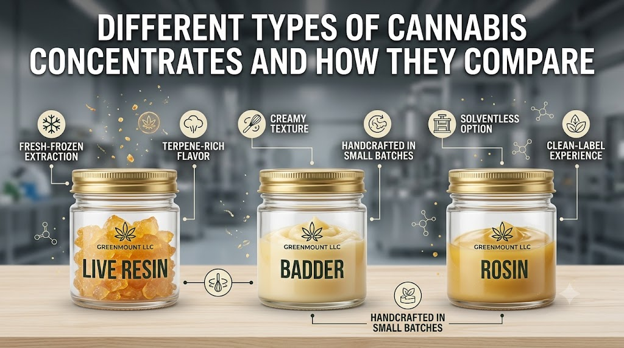
Different Types of Cannabis Concentrates and How They Compare
October 9, 2026

Packaging is no longer just the final step before a cannabis product reaches the shelf. In regulated markets, it plays a major role in safety, compliance, product freshness, and customer trust. For concentrates, the need is even higher because texture, aroma, potency, and handling can all be affected by poor packaging choices.
Greenmount LLC, founded in 2017, operates in this regulated space with a focus on small-batch vape cartridges, badder, and rosin carts, where packaging must support both quality and legal responsibility.
Cannabis concentrates are sensitive products. They can be thick, sticky, aromatic, and highly concentrated, which means they need packaging that protects the product and helps customers use it safely.
In regulated markets, packaging must do more than look clean. It must also help with:
For a licensed Type 7 manufacturer like Greenmount LLC, packaging is part of the full production process, not an afterthought.
One of the strongest trends in cannabis concentrate packaging is compliance-first design. This means packaging is planned around legal requirements before style or branding decisions are made.
In regulated markets, labels often need to include important product details such as batch information, testing status, ingredients, usage warnings, and product type. If the package does not have enough space for this information, the product may face delays before reaching retailers.
Compliance-first packaging usually focuses on:
This trend helps manufacturers avoid last-minute packaging changes and keeps products moving through the supply chain more smoothly.
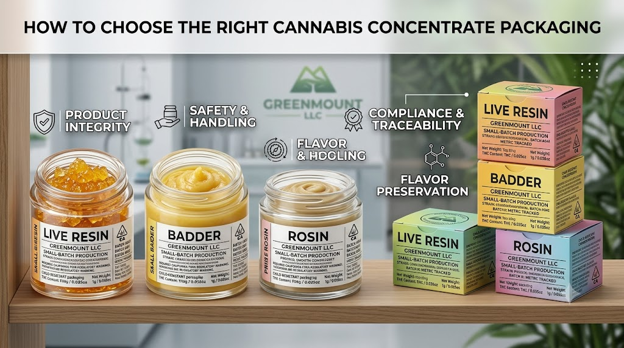
Concentrates such as live resin, badder, distillate, and rosin can be affected by storage conditions. Heat, light, and air exposure may reduce flavor, change texture, or affect the overall experience.
Because of this, packaging is becoming more focused on product protection. Containers, cartridges, and outer packaging must help preserve the product from filling to final use.
Good protective packaging can help with:
For small-batch products, this is especially important because each batch may be tied to a specific strain, harvest, or limited release.
Small-batch products are often made with more hands-on care and closer quality control. Packaging for these products needs to support that identity without becoming overly promotional or confusing.
Greenmount LLC focuses on small-batch vape cartridges, badder, and rosin carts. In this type of production, packaging should help explain the product clearly while giving customers confidence in what they are buying.
Small-batch packaging often highlights:
This approach helps customers understand the difference between a limited run and a standard product without relying on heavy sales language.
Customers in regulated markets want to know what they are buying before they make a decision. This is especially true for concentrates because product types can vary widely.
A customer may want to know whether a product is live resin, distillate, badder, or rosin. They may also want to understand the general texture, intended use, and storage needs.
Clear packaging information can include:
When information is easy to find, customers feel more confident, and retailers can answer questions faster.
The table below shows common packaging needs for different concentrate products in regulated markets.
| Product Type | Packaging Priority | Why It Matters |
| Live Resin Carts | Leak resistance and terpene protection | Helps preserve aroma, flavor, and product consistency |
| Distillate Carts | Secure cartridge packaging | Supports consistent handling and retail display |
| Rosin Carts | Clean storage and heat awareness | Helps protect solventless product quality |
| Badder | Airtight container and texture protection | Helps maintain whipped, creamy consistency |
| Limited Drops | Clear batch and product details | Helps customers understand small-batch availability |
In regulated cannabis manufacturing, every batch must be traceable. Packaging must support this process by making it easy to connect the product to its production records and testing results.
This is important for both safety and accountability. If a product needs to be reviewed, held, or checked, the package should make identification simple.
Packaging that supports batch tracking may include:
For Greenmount LLC, this matters because small-batch production depends on accurate records from input material through extraction, post-processing, filling, and final packaging.
Regulated cannabis products often require packaging that helps prevent accidental access and shows whether a product has been opened. These features are especially important for concentrates because they are potent products.
Child-resistant and tamper-evident packaging helps protect customers, retailers, and manufacturers. It also supports responsible sales in legal markets.
Common features may include:
The goal is to make packaging secure while still keeping it practical for adult customers to open and use.
For Greenmount LLC, packaging trends connect directly to its work as a licensed Type 7 manufacturer focused on small-batch vape cartridges, badder, and rosin carts. The company’s production model depends on quality control, batch accuracy, and careful handling.
Packaging should support the same standards used during extraction and post-processing. That means the final package should help protect terpene-rich products, preserve texture, support testing requirements, and keep customers informed.
In regulated markets, strong packaging is not only about presentation. It is part of responsible manufacturing from start to finish.
The future of cannabis concentrate packaging is shaped by safety, clarity, compliance, and product protection. As regulated markets continue to mature, packaging must help manufacturers protect quality while giving customers simple and accurate information.
For products such as vape cartridges, badder, and rosin carts, the right package can support freshness, trust, and responsible use. Greenmount LLC’s small-batch approach fits well with these trends because careful production needs packaging that is just as thoughtful, secure, and easy to understand.