Different Types of Cannabis Concentrates and How They Compare
October 9, 2026
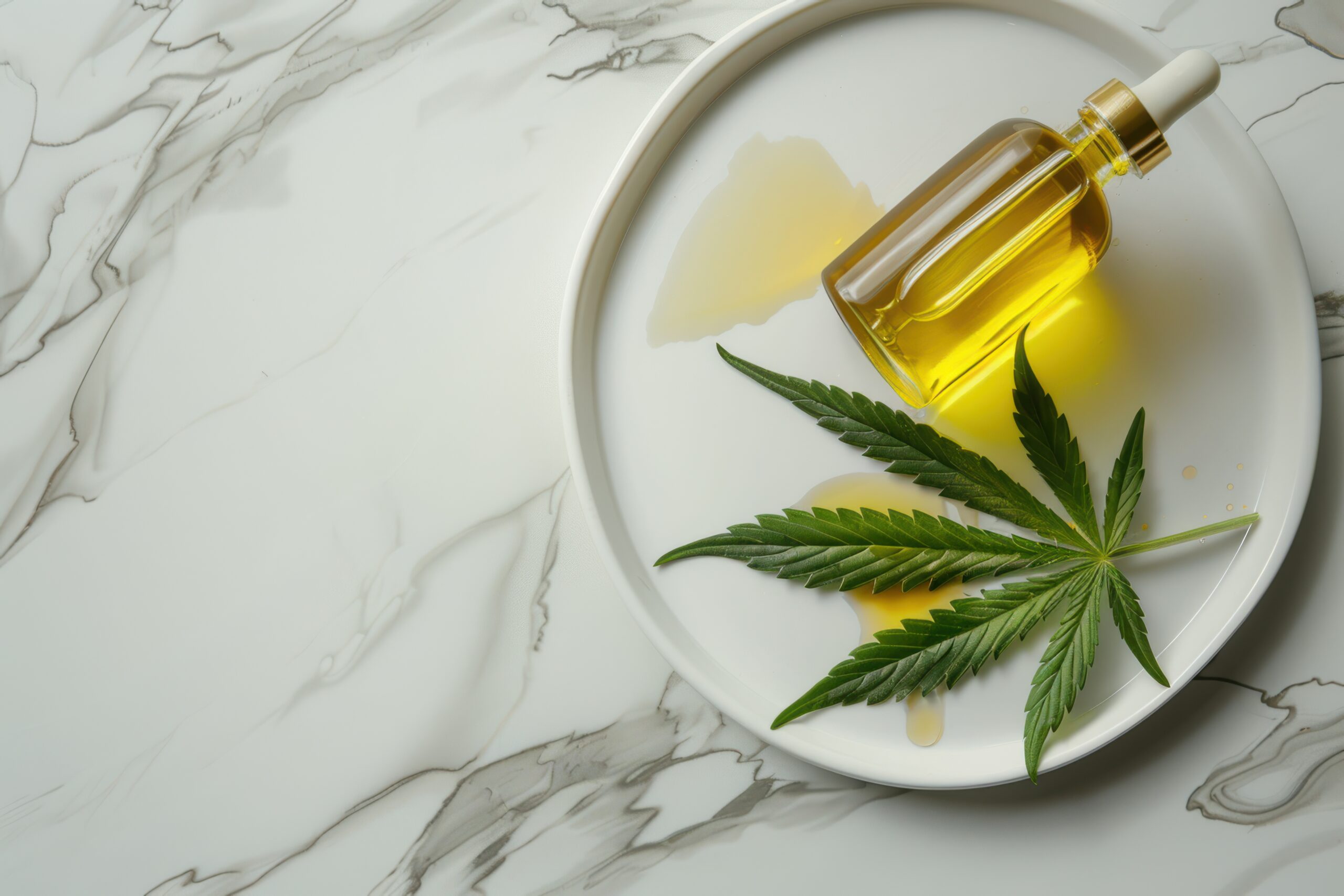
Cannabis has changed a lot over the years, and so has the way people choose to use it. Flower is still common, but many adults now prefer concentrates because they offer a different experience and more control over flavor and strength. Before trying them, it helps to understand what they are and how they are made.
This guide explains what cannabis concentrate is, how it is produced, the common forms you may see, and how it can be used in a safe and informed way. The focus stays simple, factual, and easy to follow for everyday readers.
So, what is cannabis concentrate in simple terms? It is a product made by extracting specific compounds from the cannabis plant, mainly cannabinoids and terpenes. These compounds are responsible for effects, aroma, and taste. By separating them from the rest of the plant material, manufacturers create a more refined product.
Concentrates are thicker and stronger than raw flower. A small amount often delivers the same effect as a larger amount of dried cannabis. Because of this, they are usually used in smaller portions and with more care.
Cannabis flower contains many parts that are not needed for the final experience. Stems, fibers, and other plant matter do not add much value when it comes to flavor or effect. Concentrates remove most of that extra material.
Key differences include:
Because they are more refined, concentrates require careful production and testing. This is where licensed manufacturing becomes very important for consumer safety.
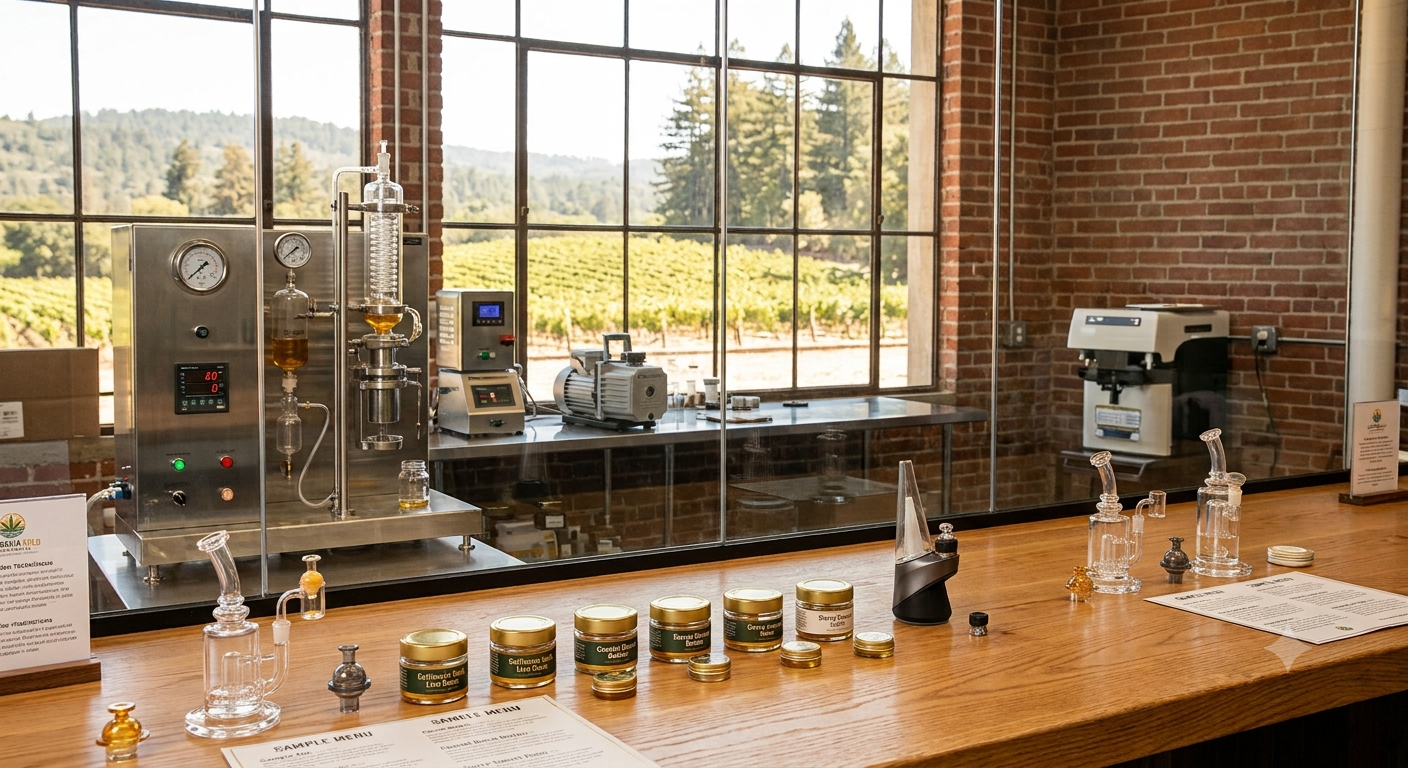
Cannabis concentrates are created through extraction. This process pulls desired compounds out of the plant. At Greenmount, LLC, this work is done under a California Type 7 manufacturing license. This license allows the use of volatile solvents in a controlled and regulated setting.
There are two main approaches used in concentrate production:
Each method has its own benefits and produces different textures and results. Facilities that hold a Type 7 license must follow strict fire, safety, and engineering rules. Closed-loop systems, trained staff, and detailed tracking are part of daily operations.
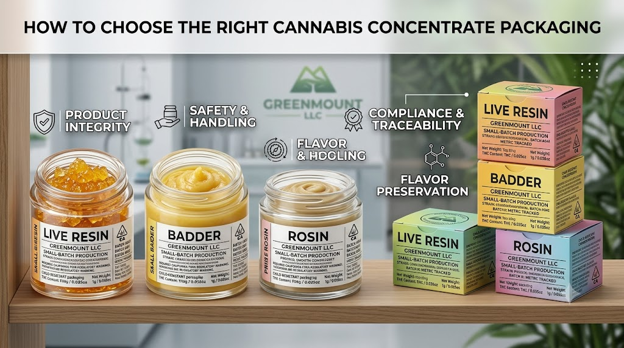
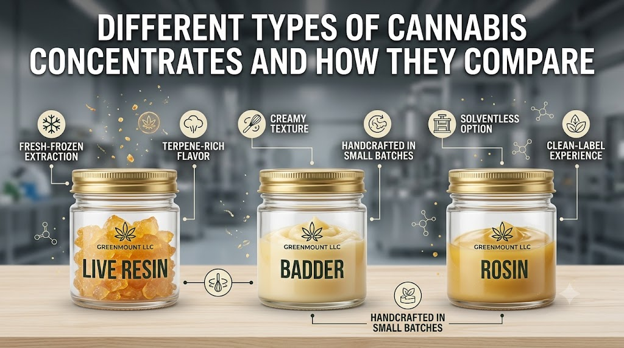
There are many forms of concentrates available today. Each one offers a different texture, use style, and flavor experience. Below are some of the most common types made in small-batch settings.
Each type serves a different preference. Some users focus on flavor, while others prefer consistency or simplicity.
Rosin carts have grown in popularity because they are made without chemical solvents. Rosin is created by applying heat and pressure to premium flower or hash. This process releases oils while keeping the natural terpene profile intact.
Rosin carts are often chosen by people who want minimal processing. The oil tends to be rich in taste and reflects the original plant closely. Because no solvents are used, attention shifts to temperature control and material quality.
Important points about rosin carts:
Live resin carts are made using fresh frozen cannabis instead of dried flower. Freezing the plant right after harvest helps keep delicate terpenes from breaking down. During extraction, volatile solvents pull these compounds into the final oil.
The result is a cartridge with a strong aroma and a layered flavor. Live resin carts are often strain-specific, meaning the taste reflects a particular plant variety.
Features of live resin carts include:
Badder is a concentrate known for its creamy, whipped consistency. It is created through hydrocarbon extraction followed by controlled whipping during the purging stage. This texture makes it easier to handle compared to harder concentrates.
Badder is often favored by those who enjoy dabbing or using specialized devices. The texture helps preserve aroma while allowing simple portion control.
Badder characteristics:
Safety is a major concern in concentrate production. Because volatile solvents can be dangerous if misused, California enforces strict rules for Type 7 facilities. Greenmount, LLC operates under these rules with full compliance.
Key safety practices include:
Every batch is tracked from start to finish using the state system. Products must pass lab testing for potency, residual solvents, heavy metals, and microbes before reaching shelves.
Below is a simple table to help compare popular concentrate types based on texture, method, and typical use.
| Concentrate Type | Extraction Method | Texture | Common Use |
| Live Resin | Volatile solvent | Thick oil | Vape carts |
| Distillate | Volatile solvent | Clear oil | Vape carts |
| Badder | Volatile solvent | Creamy | Dabbing |
| Rosin | Solventless | Soft solid | Carts or dabbing |
This table offers a basic view. Each product can still vary based on strain, batch size, and handling.
Small-batch manufacturing focuses on attention to detail. Instead of producing massive volumes, teams handle limited runs with more direct oversight. This approach allows adjustments based on material quality and feedback.
Benefits of small-batch work include:
For concentrates, this level of care can make a clear difference in consistency and reliability.
Understanding what cannabis concentrate is helps people make informed choices. These products are more refined than flower and require careful production, handling, and use. From rosin carts and live resin carts to soft badder, each form offers something different in texture and taste.
When made in licensed facilities with strict safety standards, concentrates can be a reliable option for adults seeking variety. Learning about extraction, regulation, and responsible use builds confidence and supports a safer experience overall.