Different Types of Cannabis Concentrates and How They Compare
October 9, 2026
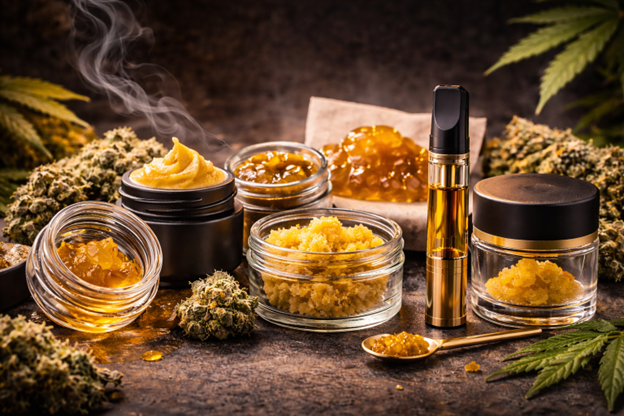
Cannabis concentrates can feel confusing at first. Many people hear words like live resin, rosin, or badder and are not sure what they really mean. The truth is simple. Concentrates are forms of cannabis where the most active parts of the plant are separated and collected.
This makes the product stronger and more flavorful than regular flower. In this guide, we will talk about the different types of cannabis concentrates in clear language, so anyone can understand what they are and how they are made.
Cannabis concentrates are products made by extracting cannabinoids and terpenes from the cannabis plant. Cannabinoids like THC are the compounds that create effects. Terpenes are responsible for aroma and taste.
Instead of smoking dried flower, some consumers prefer concentrates because:
The goal is simple. Remove unwanted plant material and keep the active compounds. This results in oil, wax, or other thick forms that are rich and concentrated.
When people search for the different types of cannabis concentrates, they are usually trying to understand texture, extraction method, and use. Each type has its own character.
Before looking at specific products, it helps to understand how they are made. There are two primary methods.
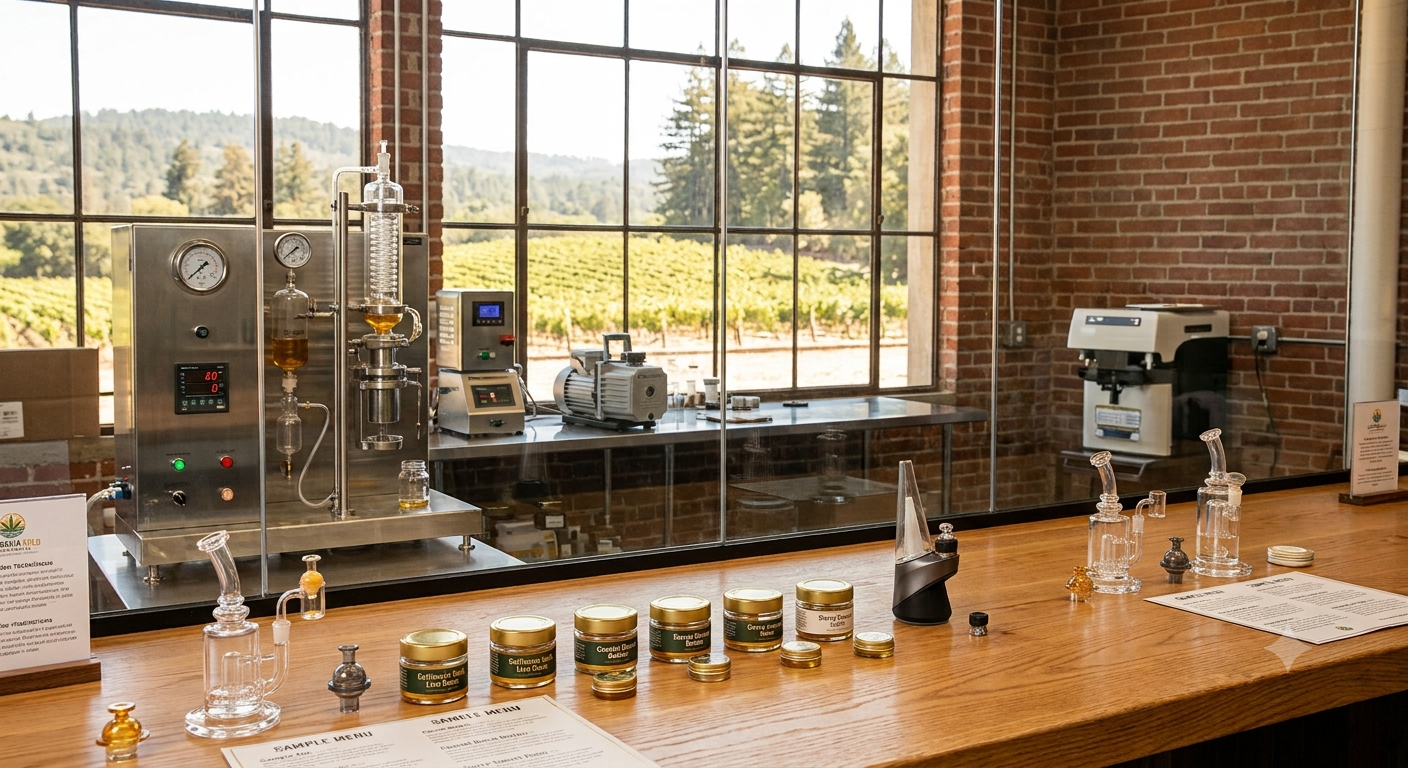
This method uses volatile solvents such as butane or propane to pull cannabinoids and terpenes from the plant material. The solvent is later removed through purging.
Under a California Type 7 manufacturing license, companies are allowed to perform this kind of extraction. It requires:
This method is used to create products like live resin and badder.
This method does not use chemical solvents. Instead, heat and pressure are applied to cannabis flower or hash to squeeze out oil. Rosin is the most common solventless concentrate. Many consumers like this method because it feels simple and clean. Both methods can produce high-quality products when done correctly. The difference mostly comes down to process and preference.
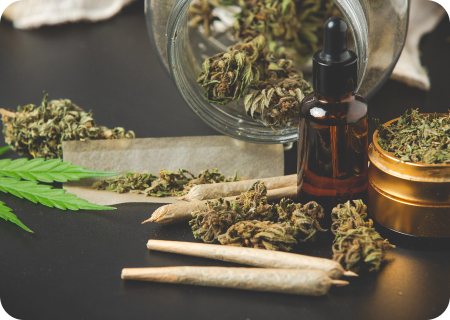
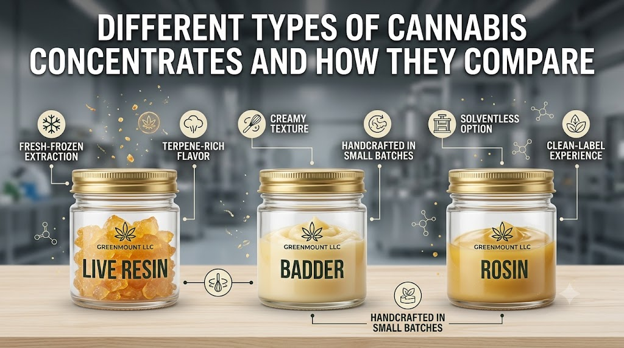
Live resin is one of the most talked-about concentrates today. It is made from fresh-frozen cannabis flower rather than dried flower. Freezing the plant right after harvest helps preserve terpene content.
Here is what makes live resin distinct:
Because of the fresh material, live resin often smells closer to the original plant. Many consumers say it tastes more natural.
Live resin is commonly used in live resin carts, which are vape cartridges filled with this terpene-rich oil. These cartridges allow convenient use while maintaining flavor.
When reviewing the different types of cannabis concentrates, live resin is often chosen by those who care about taste as much as potency.
Rosin is made without solvents. Heat and pressure are applied to the flower or hash, and the oil is pressed out. The result is a sticky and rich concentrate.
Some important features of rosin include:
Rosin carts are vape cartridges filled with solventless rosin oil. These products appeal to consumers who prefer minimal processing. Because rosin can be thicker than other oils, careful blending is sometimes needed for proper cartridge performance.
The process may look simple, but quality rosin depends heavily on good starting material and controlled temperature.
In discussions about the different types of cannabis concentrates, rosin often represents the solventless category.
| Concentrate Type | Extraction Method | Texture | Flavor Profile | Common Use |
| Live Resin | Hydrocarbon solvent | Thick oil | High terpene, fresh | Live resin carts, dabs |
| Rosin | Heat and pressure | Sticky, sap-like | Natural plant flavor | Rosin carts, dabs |
| Badder | Hydrocarbon solvent | Whipped, creamy | Rich and aromatic | Dab jars |
| Distillate | Refined solvent process | Clear oil | Neutral, terpene added | Vape cartridges |
This table gives a simple view of the different types of cannabis concentrates and how they differ in texture and production method.
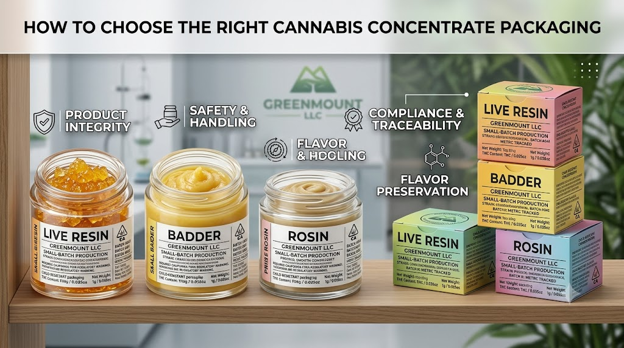
Some manufacturers focus on small-batch production rather than large-scale runs. This allows closer attention to each step.
In a Type 7 facility, safety and compliance are serious matters. Requirements include:
Small batches allow:
Greenmount LLC, founded in 2017 by Thair Daoud, Zaid Jadan, and Steven Daoud, operates as a licensed Type 7 cannabis manufacturer in California. The company focuses on small-batch vape carts and concentrates, including live resin carts, rosin carts, and badder. Their work follows strict state regulations and testing standards before products reach dispensaries.
The goal in this type of operation is consistency and safety. Every batch must meet testing requirements for potency, heavy metals, microbials, and residual solvents.
Selecting a concentrate depends on personal preference. Some consumers care most about flavor. Others focus on potency. Some want solventless products.
Consider these factors:
For example:
Understanding the different types of cannabis concentrates helps consumers make informed decisions instead of guessing based on names alone.
Cannabis concentrates are not as complex as they first appear. They are simply refined forms of the plant, created to highlight potency and flavor. Live resin, rosin, badder, and distillate each offer a different experience shaped by how they are made. When production follows careful standards, especially in licensed Type 7 facilities, safety and consistency remain central.
By learning about the different types of cannabis concentrates, consumers can approach these products with clarity, calm judgment, and a better sense of what fits their own preferences.