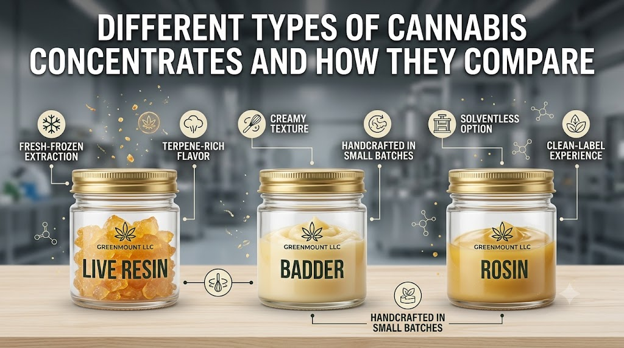
Different Types of Cannabis Concentrates and How They Compare
October 9, 2026

Rosin carts have become a popular choice for consumers who want a cleaner, terpene-rich vaping experience without heavy processing. For licensed manufacturers, understanding how to make rosin carts means more than filling oil into hardware. It requires careful material selection, controlled processing, testing, and compliant packaging.
Greenmount LLC, founded in 2017, focuses on small-batch cannabis manufacturing in California with attention to quality, safety, and consistency. This guide explains the key steps behind reliable rosin cartridge production in a simple, educational way.
Rosin carts are vape cartridges filled with rosin-based cannabis oil. Rosin is made by applying heat and pressure to premium flower or hash. This process does not use volatile solvents, which makes it appealing to consumers who prefer solventless products.
Unlike some other concentrates, rosin keeps much of the plant’s natural character when handled correctly. This includes aroma, flavor, and strain-specific terpene expression. In cartridge form, rosin must also have the right texture and flow so it can work well with vape hardware.
Rosin carts are often valued because they offer:
Consistent vape performance means the cartridge delivers smooth vapor, steady flavor, and reliable oil movement from the first use to the last. If the oil is too thick, it may not wick properly. If it is too thin, it may leak or burn too quickly.
For a licensed manufacturer like Greenmount LLC, consistency begins long before filling. It starts with the input material, processing method, oil handling, and final testing. Small-batch production helps because each batch receives close attention.
The main goals are:
The quality of a rosin cart depends heavily on the cannabis material used. Premium flower or high-quality hash usually creates better rosin. Poor input material can lead to weak flavor, dark color, low yield, and uneven cartridge performance.
When learning how to make rosin carts, the first lesson is that better input usually creates better output. Greenmount LLC’s small-batch approach supports this because smaller runs allow closer review of each material source.
Manufacturers often look for:
Rosin is created through heat and pressure. The goal is to separate resin from the plant material while protecting flavor and cannabinoids as much as possible. Since rosin is sensitive to heat, careful handling is important.
Too much heat may damage terpenes and create a harsher experience. Too little control may lead to uneven texture and poor yield. This is why trained staff, written procedures, and proper equipment matter in a regulated facility.
A careful pressing process helps preserve:
Fresh rosin is often too thick to perform well in a vape cartridge without additional preparation. The oil must be brought to a workable consistency while protecting its natural qualities.
This step may involve controlled warming, gentle blending, and careful observation. The goal is not to overprocess the rosin, but to make it suitable for cartridge use. For some formulations, terpene balance also plays a role in oil flow and flavor.
| Production Factor | Why It Matters for Rosin Carts |
| Oil thickness | Supports proper wicking and vapor production |
| Terpene balance | Helps flavor, aroma, and oil movement |
| Temperature control | Protects sensitive compounds during handling |
| Batch review | Helps maintain repeatable product quality |
This stage is one reason rosin carts require experience. A product can look good in bulk form but still perform poorly if the oil does not match the cartridge hardware.
Cartridge hardware is a major part of vape performance. Rosin-based oil may behave differently from distillate or live resin, so the hardware must support the oil’s thickness and flow.
Greenmount LLC considers this step important because even well-made oil can disappoint consumers if the hardware is not suitable. Testing the match between oil and cartridge helps reduce clogging, leaking, and burnt flavor.
Important hardware considerations include:
Filling is more than placing oil into a cartridge. It requires control, cleanliness, and accuracy. If the oil is overheated during filling, flavor may suffer. If the fill level is inconsistent, consumers may receive uneven products.
Small-batch production allows closer attention during this stage. Each cartridge can be filled with care, checked visually, and handled in a way that supports quality.
A strong filling process includes:
In regulated cannabis manufacturing, testing is not optional. Finished products must meet safety and quality standards before reaching retailers. This protects consumers and supports trust in the legal market.
For rosin carts, testing may review potency, contaminants, microbials, and hardware-related safety concerns. In California and similar regulated markets, manufacturers must also maintain batch records and follow state tracking requirements.
Testing supports:
This is especially important for a Type 7 manufacturing environment, where strong procedures and safety controls are part of daily operations.
Greenmount LLC operates in the regulated cannabis manufacturing space with a focus on small-batch vape cartridges, concentrates, and rosin carts. The small-batch model gives the team more control over each stage of production.
This approach supports:
Greenmount LLC’s work reflects the idea that cannabis manufacturing should respect the plant while also meeting modern safety expectations. The goal is not just to make a cartridge, but to create a reliable experience from a tested and compliant product.
Making rosin carts for consistent vape performance requires patience, skill, and a controlled manufacturing process. From selecting quality cannabis material to pressing, preparing, filling, and testing, every step affects the final experience.
Greenmount LLC uses a small-batch approach to support quality, safety, and strain-specific character in its cannabis products. For consumers comparing rosin options or searching for the best live rosin carts, consistency should always matter as much as flavor. A good cart should be clean, smooth, reliable, and made with care.